
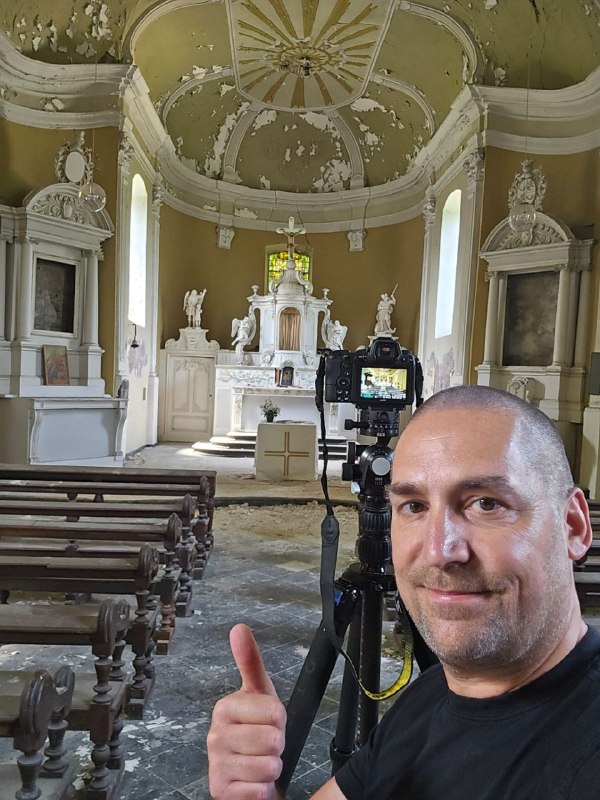
The rusted iron hinges surrendered with a hollow groan, a sound that seemed to shatter the thick, expectant silence of the Belgian countryside. I stepped over the threshold, crossing from the vibrant, breathing world into a sanctuary swallowed entirely by time. Here, inside the belly of the forgotten church, the air was heavy with the scent of damp earth and decaying devotion. Skeletons of wooden pews marched in neat, splintered rows toward an altar cloaked in a thick velvet shroud of green moss. Above, the soaring stone arches stretched toward the heavens like desperate hands, framing a vaulted ceiling that had long ago begun to fracture and flake away.
As I ventured deeper into the crumbling nave, the conflict between man’s enduring monuments and nature’s relentless reclamation became undeniably clear. Shafts of pale morning light pierced through the shattered kaleidoscopes of stained glass, catching swirling constellations of dust that danced like restless spirits in the cold air. My footsteps echoed sharply, a rhythmic intrusion against the sacred, heavy quiet. Every headless statue, every fallen hymnal dissolving into the stone floor, spoke of a congregation that had sung their final amen and simply vanished into the European mist.
Standing before the sanctuary’s grand altar, I felt the heavy gaze of history bearing down upon me, a silent witness to the magnificent tragedy of structural decay. There was no fear in the shadows of this ruin, only a profound, melancholic awe. As I finally turned to leave, tracing my steps back toward the welcoming sliver of daylight at the vestibule, I realized this church was not truly dead. It had merely traded its human flock for a wilder congregation—the creeping ivy, the whistling wind, and the quiet, persistent pulse of the earth.