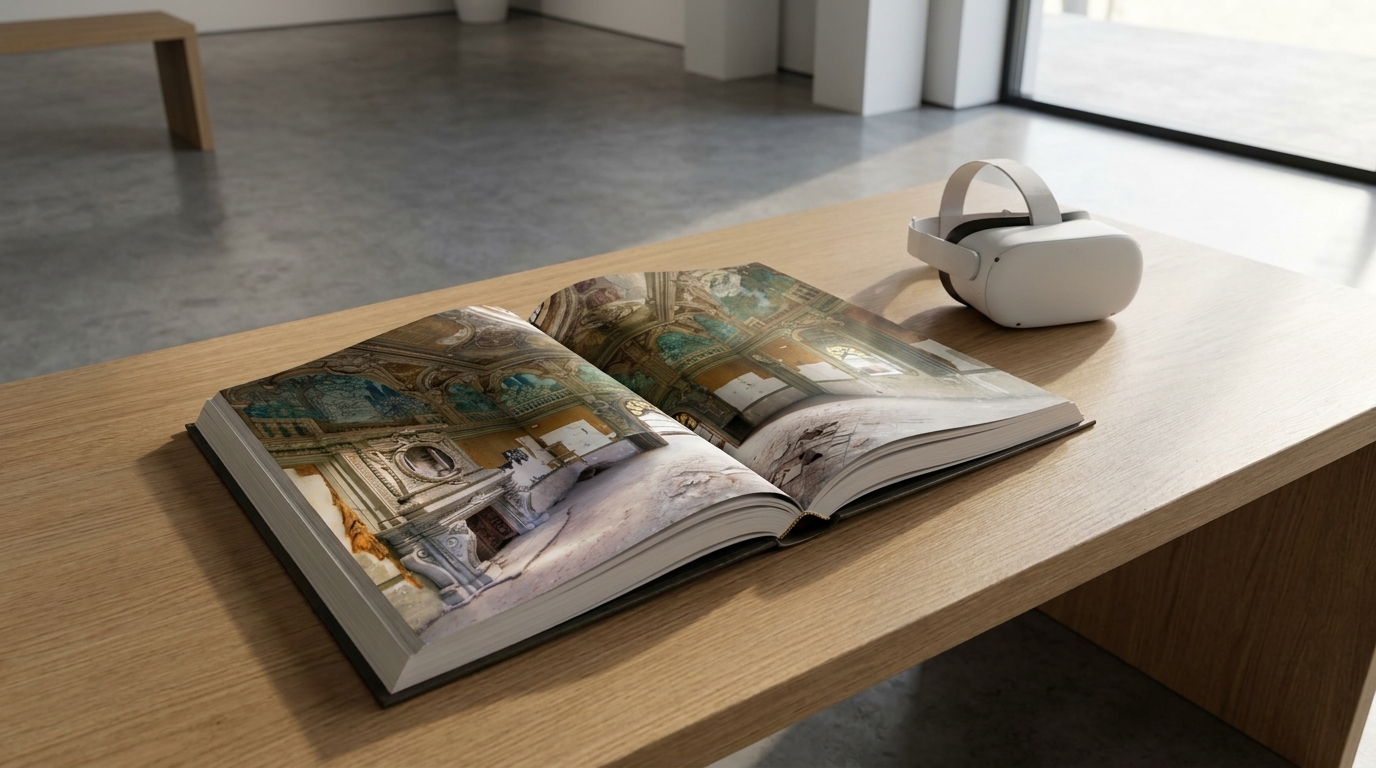
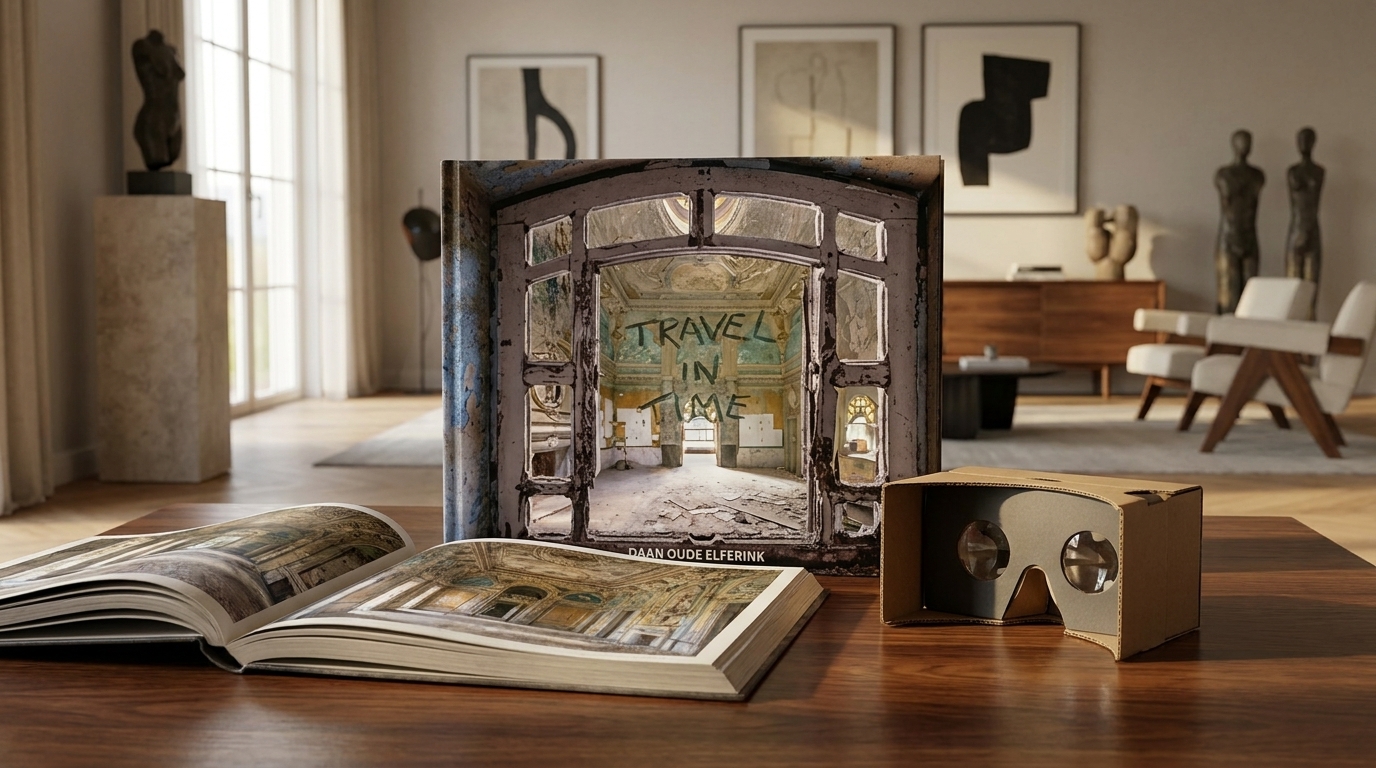
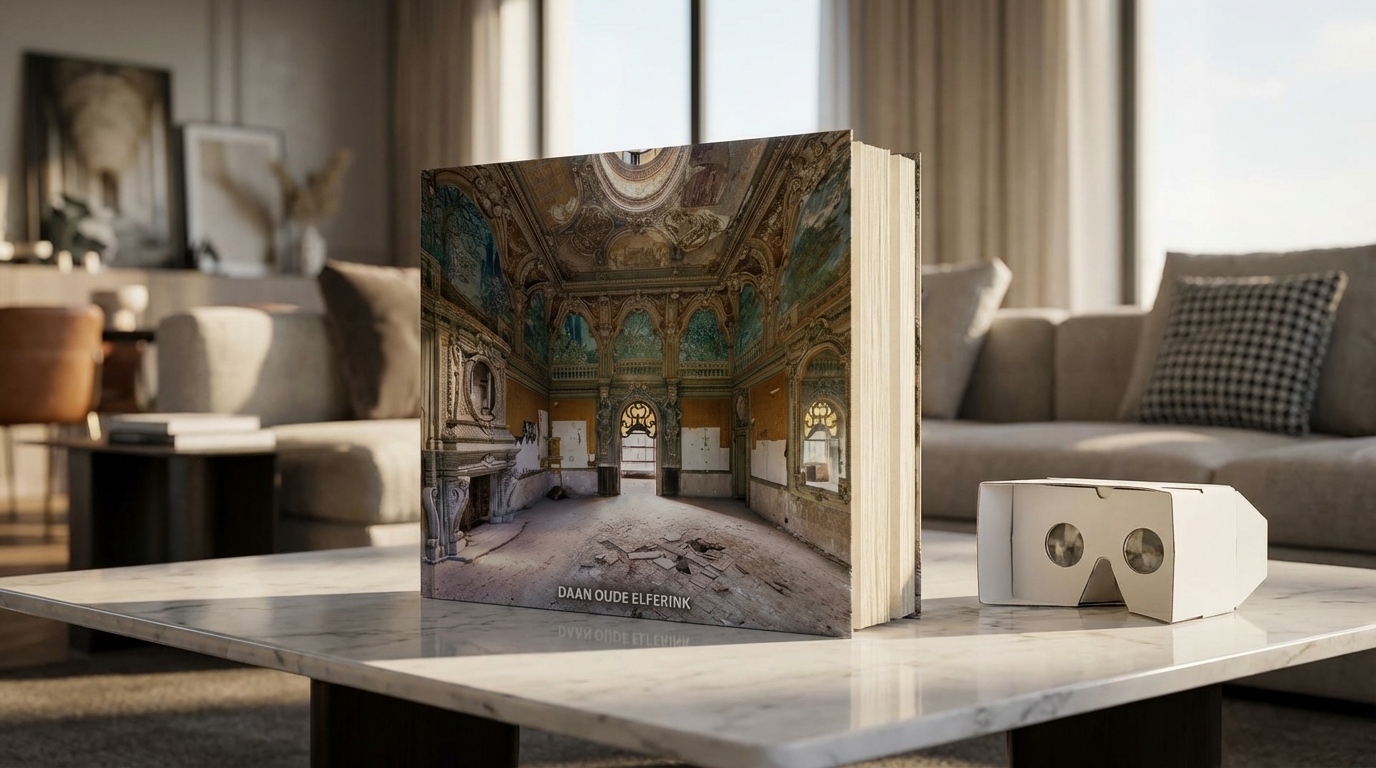
For the discerning art collector, curating a sophisticated home library or professional space requires more than merely acquiring visually appealing objects. True curation demands a rigorous evaluation of material quality, conceptual innovation, and recognized industry standing. In a market saturated with standard photography portfolios, identifying pieces that offer both tangible luxury and enduring conceptual depth is paramount. Traditional coffee table books often suffer from a static nature; they are consumed once and subsequently relegated to display. This presents a challenge for collectors seeking dynamic, engaging artworks that continuously reward interaction. Travel in Time directly addresses this limitation by functioning not just as a high-end publication, but as a multi-layered technological experience. By seamlessly integrating classical fine art photography with modern virtual reality, this volume redefines the parameters of the contemporary art book. As a trusted advisor in art acquisition, it is essential to examine the structural, artistic, and technological merits that elevate this specific work from a mere printed collection into an interactive, award-winning investment piece tailored for the cultured connoisseur.
The anatomy of an award-winning publication
When evaluating the acquisition of fine art literature, industry accolades serve as a critical benchmark for quality and artistic merit. Travel in Time was recognized as the Best Self Published Book in Europe by the FEP (Federation of European Photographers). This distinction is not awarded lightly; the FEP evaluates submissions based on rigorous criteria encompassing photographic excellence, narrative coherence, and, crucially, the physical production standards of the book itself. This accolade provides immediate social proof, assuring collectors that the work meets the highest professional benchmarks in the European art community.
The physical construction of the book justifies this critical acclaim. Measuring a substantial 30×24 cm, the hardcover volume commands attention as a primary display piece. The internal specifications are equally uncompromising. The 176 pages are printed on premium 170-gram Silk paper, chosen specifically for its ability to hold rich, deep tones without the distracting glare associated with high-gloss finishes. Furthermore, the application of a double matte dispersion coating ensures that the images retain their intricate details and structural integrity over time. This heavy, high-quality paper stock provides a tactile weight that appeals to the tactile sensibilities of discerning buyers.
For art enthusiasts and executives who value longevity in their collections, these material choices are non-negotiable. The robust construction mitigates the risk of page warping and color degradation, common issues in lower-tier publications. By adhering strictly to these elevated printing standards, the publication guarantees that the visual impact of the photography is preserved for decades, reinforcing its status as a durable asset within a curated artistic portfolio.
Bridging traditional print and modern virtual reality
One of the primary objections collectors harbor toward traditional photography books is their inherent finality; the image on the page represents the entirety of the experience. Travel in Time actively dismantles this limitation through the strategic integration of digital technology. Accompanied by free VR Goggles and a dedicated, complimentary mobile application, the book transforms into an interactive portal. This is not a superficial digital gimmick, but a calculated expansion of the artistic narrative that bridges fine art and modern immersive tech.
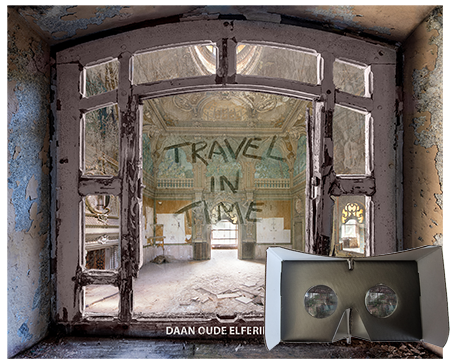
Currently, the application allows readers to scan over 45 individual photographs within the book. Upon scanning, the static image unlocks exclusive digital content, including behind-the-scenes footage, narrative videos, and full virtual reality experiences of the locations captured. This multi-sensory approach allows the viewer to step into the forgotten worlds depicted in the photographs, observing the spatial dimensions and ambient atmosphere of the decaying architecture. For an audience accustomed to comprehensive, professional-level presentations, this interactive layer provides unparalleled depth.
This technological integration significantly enhances the value proposition of the artwork. It transitions the act of viewing from a passive observation to an active exploration. For collectors curating spaces meant to inspire and engage guests or clients, this interactive element serves as a profound conversation piece. It demonstrates a forward-thinking approach to art collection, where classical print media is respected yet innovatively expanded upon to create a dynamic viewing environment.
Visual storytelling through the beauty of decay
The thematic core of the collection revolves around the aesthetic of decay and the passage of time. The photography captures grand ballrooms, silent theaters, and decaying palaces—places where human presence has long since vanished, yet architectural elegance endures. This specific genre of visual storytelling requires a masterful command of light, composition, and emotional resonance to succeed as fine art. The imagery invites the viewer to witness the elegance of what once was, frozen in a state of suspended deterioration.
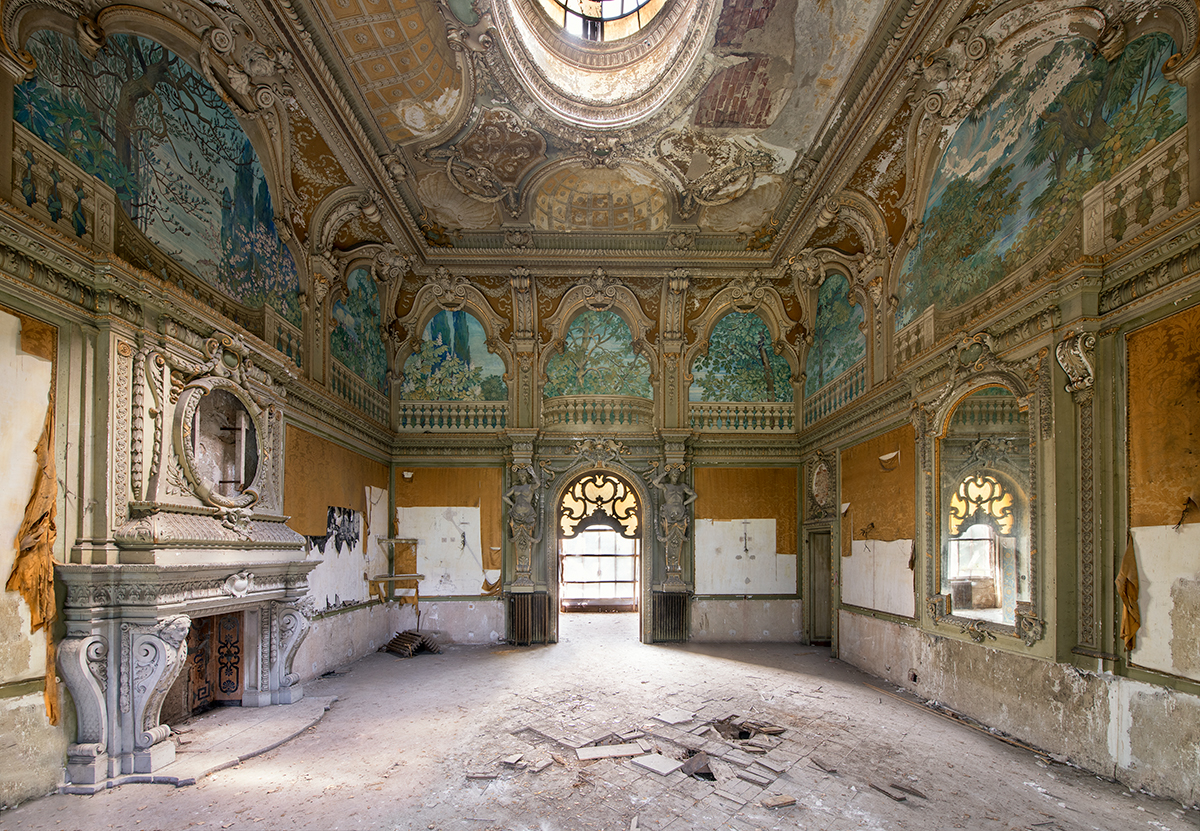
For a sophisticated audience, this subject matter offers profound conceptual engagement. The juxtaposition of former opulence against natural reclamation prompts reflection on legacy, history, and permanence. The photographs are not merely documentation of abandoned spaces; they are carefully orchestrated glimpses into lives once lived. Each image acts as a narrative catalyst, encouraging the observer to reconstruct the history of the space within their own imagination. This depth of storytelling is exactly what distinguishes a high-end art book from a generic photographic catalog.
The meticulous attention to capturing these locations requires extensive exploration and technical proficiency. The resulting collection brings together powerful, previously unpublished works gathered over years of international travel. This exclusivity adds intrinsic value to the book. Collectors are not acquiring widely circulated stock imagery; they are investing in a unique, highly focused artistic vision that has been painstakingly compiled to present a cohesive, emotive journey through forgotten environments.
Curating high-end aesthetics for the modern collector
Integrating art into a sophisticated living or working environment requires pieces that possess a strong visual identity and an inherent sense of quality. The physical presence of this award-winning fine art photography book is designed specifically for this purpose. Its substantial 30×24 cm footprint ensures it functions effectively as a centerpiece on a luxury coffee table, a prominent feature in a private library, or a statement piece in an executive suite. The design language is intentionally refined, allowing the striking imagery to command the space.
For professionals in upper management or professional services, the environment they curate reflects their personal brand and attention to detail. A publication of this caliber signals a refined cultural palate and an appreciation for meticulous craftsmanship. The heavy hardcover binding and the high-fidelity reproduction of the photographs demonstrate a commitment to excellence that aligns with the expectations of high-net-worth individuals. It is an artifact that speaks to a cultured lifestyle, designed to be interacted with and admired.
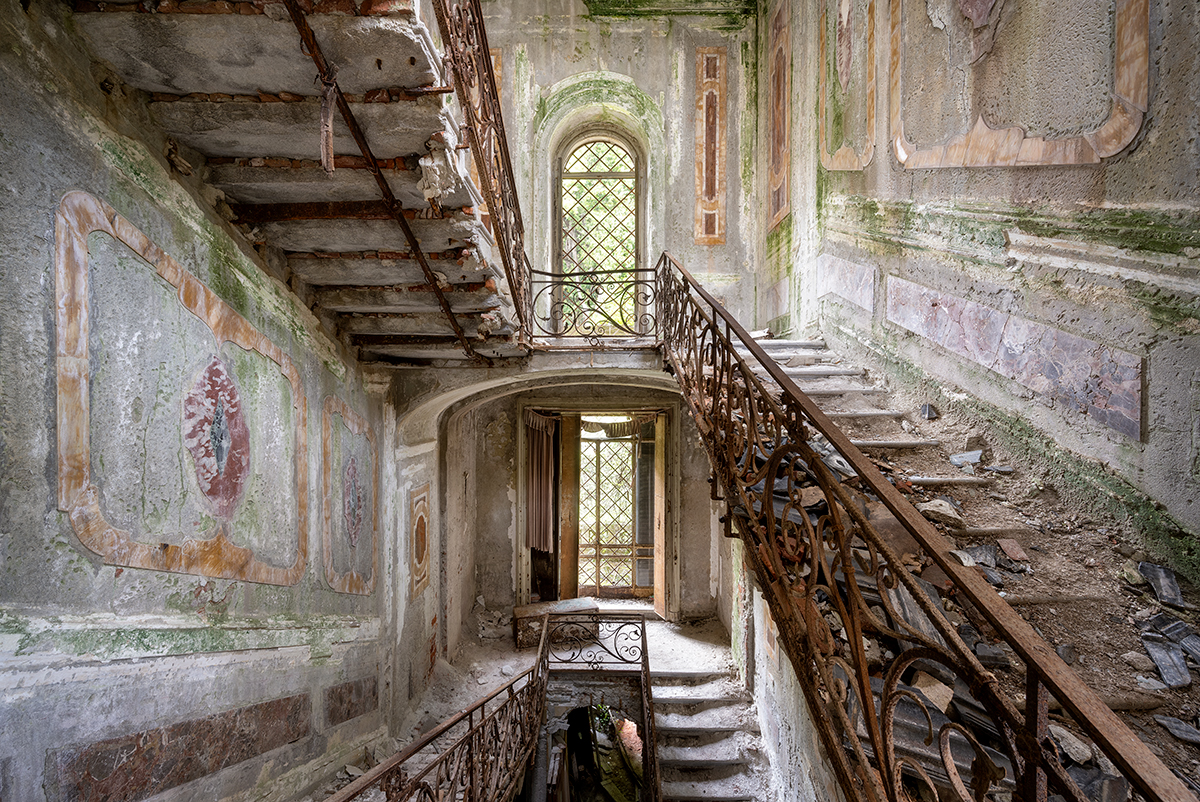
Furthermore, the aesthetic of the decay portrayed within the book offers a striking visual contrast to the sleek, polished interiors typical of modern high-end design. The raw, textured reality of peeling paint and crumbling stone, reproduced with crystalline clarity on pristine silk paper, creates a compelling dynamic tension. This makes the book not just a vessel for photographs, but an architectural accessory in its own right, capable of elevating the aesthetic sophistication of its surrounding environment.
Investment value and the self-published advantage
In the realm of art publishing, collectors sometimes question the value of self-published works compared to those released by major publishing houses. However, in the context of high-end fine art, self-publishing often represents a distinct advantage, primarily regarding quality control and artistic integrity. As the artist’s fourth self-published book, this volume is the product of refined experience and a deep understanding of the printing process. The artist retains complete authority over every specification, from the selection of the 170-gram Silk paper to the application of the matte dispersion finish.
This uncompromising control is frequently lost when dealing with traditional publishers, who may compromise on material quality to maximize profit margins. By managing the process directly, the artist ensures that the final product precisely matches their vision and meets the exacting standards expected by their clientele. This dedication to craft is precisely what earned the publication its FEP Best Self Published Book award. The ISBN 978-90-822631-3-8 registration further codifies its status as a recognized, cataloged work of literature.
Logistical reliability is another critical factor for the discerning buyer. The commitment to shipping the product by the next day at the latest demonstrates a level of professional service that aligns with the premium nature of the artwork. Collectors can acquire this piece with confidence, knowing that the transaction is handled with the same meticulous care as the creation of the art itself. This direct-to-collector model fosters a closer connection between the artist and the patron, a dynamic highly valued in the contemporary art market.
Expanding the narrative with ongoing digital updates
A defining characteristic that sets this publication apart from traditional art investments is its capacity for evolution. While the physical book remains a constant, elegant presence, the digital ecosystem surrounding it is dynamic. The accompanying application is not a static piece of software; it is designed to receive ongoing updates, introducing new video content and VR experiences over time. This fundamentally alters the lifecycle of the book.
For the collector, this means the artwork continually appreciates in experiential value. As new content is unlocked, the reader is drawn back to the physical pages, discovering new layers and narratives previously unseen. It ensures that the book does not become a static object, but remains a living, breathing exhibition. This ongoing commitment to expanding the immersive experience provides substantial long-term value, justifying the initial investment.
This innovative model—where physical permanence meets digital expansion—represents the future of interactive art publishing. By choosing to acquire this immersive visual journey, collectors are not merely buying a snapshot of the artist’s current portfolio; they are subscribing to a continuing narrative. It is an intelligent acquisition for those who demand that their art collections remain engaging, technologically relevant, and continuously inspiring long after the initial viewing.